A dimension within Cultural Legacy & Future
Sharing traditional and indigenous knowledge across generations with a focus on youth education.
150 voices speak to this
Each dimension splits this theme further — keep drilling to see how it breaks down.
Positive
Overall Community Sentiment
AI-synthesised pieces woven from many community voices on this theme. They may contain errors or interpretation — they're a reflection of the stories, not a record of fact.

We pass on traditional and new tribal knowledge from elders to young people through organized camps, ensuring it endures for future generations.
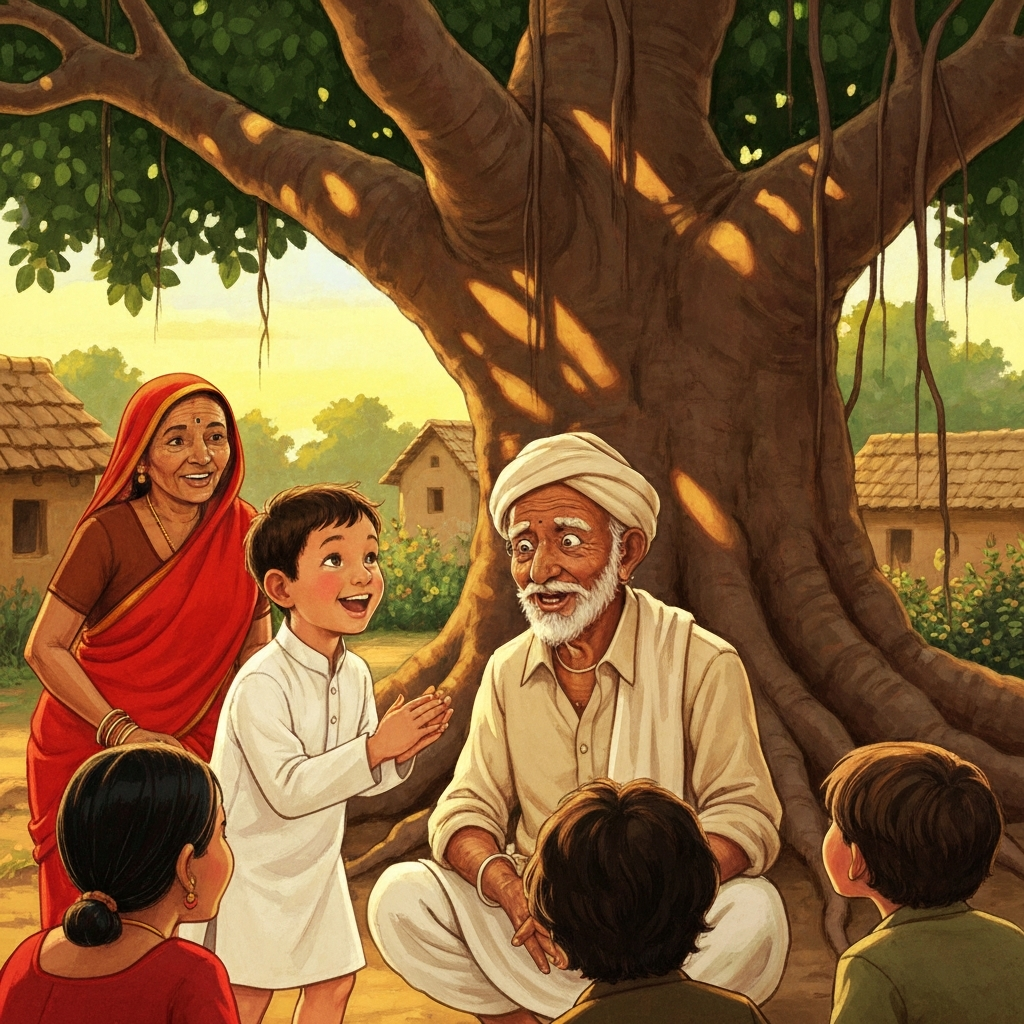
In Ghorawal, education is seen as the fundamental right to dignity, crucial for transmitting traditional forest and tribal knowledge, cultural programs, and ancestral connections to future generations

In our jungle villages, we cherish and pass down traditional crops like Majeri, along with the knowledge of local herbs and cultural practices, for the benefit of future generations.

Amidst modern stresses, our community finds strength and identity in safeguarding traditional knowledge and cultural practices through the wisdom of elders.
We should conduct camps to teach our young generation traditional forest and tribal knowledge from elders, pass it on to the next generation, and preserve it.
— NAGRIK VIKASH SANGATHAN · Kalahandi, Odisha
For knowledge transfer, we should organize camps to teach the younger generation traditional forest and tribal knowledge from elders, so that it can be passed on to the next generation and preserved.
— AbhiLL Ipsa
Camps should be organized to teach traditional forest and tribal knowledge from elders to the younger generation, to pass it on to the next generation, and to preserve it.
— Premsila Naik · Kalahandi, Odisha
Traditional forest and tribal knowledge needs to be taught from elders to the younger generation.
— Batakrushna Sahoo
Our tribe should organize knowledge-sharing camps like Dhumkudiya, where young people learn traditional forest and tribal knowledge from elders and pass it on to future generations.
— Sunil oraon · Ranchi, Jharkhand
We should organize knowledge-sharing camps like Dhumkuriya where young people learn traditional and new tribal knowledge from elders, pass it on to the next generation, and keep it safe or preserved.
— Sunil oraon · Ranchi, Jharkhand
Learn traditional forest and tribal knowledge so that this knowledge can be passed on to the next generation.
— Sunita Kumari · Ghorawal, Sonbhadra, Uttar Pradesh
In our village, traditional forest and tribal knowledge should be provided to the younger generation to facilitate knowledge transfer.
— Batakrushna Sahoo
Yes, we should organize such camps where young people learn traditional forest knowledge from elders so that this knowledge can be passed on and preserved for the next generation.
— Kachala Choudhary
Our community should organize knowledge-sharing camps like Dhumkuria, where young people learn traditional forest and tribal knowledge from elders and pass it on to the next generation. This is very important.
— Sunil oraon · Ranchi, Jharkhand
It is absolutely necessary for the youth to learn traditional forest and indigenous knowledge from elders and preserve it for the next generation.
— S Guruteli · Maliguda, Malkangiri, Odisha
And learn tribal knowledge so that this knowledge can be passed on to the next generations.
— Sunita Kumari · Ghorawal, Sonbhadra, Uttar Pradesh
Traditional knowledge about forest medicinal herbs, the language of seeds, animals, and birds should be learned from the elder generation and passed on to the youth.
— Sabina · Tumudibandh, Kandhamal, Odisha
Should camps be held to teach traditional forest tribal knowledge from elders to the younger generation, ensuring its preservation and transfer to future generations?
— Santosh Pradhan
We should promote traditional knowledge for future generations, together with elders, especially for those from places like Dhampuria camp.
— Sunil oraon · Ranchi, Jharkhand
Old sports traditions, tribal traditions, etc., should be preserved so that the coming generation can learn something.
— संगीता मीणा · Rohan Wara, Dungarpur, Rajasthan
It is essential for the elders to teach Joba Piding about traditional forest tribal knowledge. This will enable them to identify any medicinal plants from the forest in the coming generations.
— Santosh Barik · Kalahandi, Odisha
Yes, there is definitely a need for Dhumkudia for knowledge transfer. There is a need for camps that are absolutely essential for teaching traditional forest and tribal knowledge from elders and passing it on to the next generation.
— gobardhan pangi
Our tribe should organize Dhamkadiya style camps in their respective villages so that traditional knowledge can be passed from one generation to another through these camps.
— Sunil oraon · Ranchi, Jharkhand
We should acquire wisdom from the elderly and teach the current generation to remember it.
— Ramadas Badanayak · Udulibeda, Malkangiri, Odisha
Our tribe must preserve its culture to carry traditional knowledge from one generation to another.
— Sunil oraon · Ranchi, Jharkhand
Because for the knowledge of our tradition and culture to the next generation.
— अमर जीत · Ormaura, Sonbhadra, Uttar Pradesh
We should engage in traditional conservation so that we can inform future generations about herbs and traditional songs, ensuring their preservation for generations to come.
— Chanda
It is very important to pass on our traditional knowledge from one generation to another, to tell our children.
— Chanda
Ancestral knowledge must definitely be passed on from one generation to another.
— gobardhan pangi
For us, the knowledge of traditional culture, civilization, traditions, customs, food and drink, worship, lifestyle, and herbs should reach the next generation.
— Devisingh Solanki · Alirajpur, Madhya Pradesh
Culture should be preserved so that the new generation can learn something.
— संगीता मीणा · Metali, Dungarpur, Rajasthan
They want the youth to also know about their traditions and culture.
— अमर जीत · Sonbhadra, Uttar Pradesh
So that the next generation can know about our way of life.
— Sunita Kumari · Ghorawal, Sonbhadra, Uttar Pradesh
Our generation should have knowledge about our ancestors.
— Sunita Kumari · Ghorawal, Sonbhadra, Uttar Pradesh
It is absolutely essential for traditional healers and elderly people to learn about and identify medicinal plants from forest-dwelling tribes, and to preserve this knowledge for future generations.
— Anirudha Marai
The youth should also have the knowledge about herbs that our tribals possess.
— अमर जीत · Majlispur, Sonbhadra, Uttar Pradesh
One should protect their culture so that future generations have its traditional knowledge and are helped in preserving their traditions.
— Sunil oraon · Ranchi, Jharkhand
If we want to preserve our language, tradition, dance, and songs, we must teach them to the next generation.
— Gitanjali Bhoi · Sundargarh, Odisha
This community possesses traditional forest tribal knowledge and understanding, along with the teaching of forest resources, passed down by Parwati Pihiko for the younger generation.
— Premsila Naik · Kalahandi, Odisha
If we preserve our culture, our future generations will be able to learn and understand all traditional knowledge and skills.
— Upendra Kumar Mahananda
We have been living in this village for approximately 100 years. Our tribe originated in this surrounding area. There have been many changes in the forest; valuable trees, herbs, and animals have all disappeared. If we do not protect it, then within the next 20 years, along with the destruction of the forest, all types of wild animals, medicinal plants, and creepers will disappear. Camps should be organized to teach traditional forest and tribal knowledge from elders to the younger generation, transfer it to the next generation, and preserve it.
— Kumudini Chhanchan · Bhojpur, Sambalpur, Odisha
We have been living in this village for nearly 100 years. Our tribe originated in this surrounding area. The forest has undergone many changes; valuable trees, herbs, and animals have all disappeared. If we do not protect it, then within the next 20 years, the forest will be destroyed, and all types of wild animals, medicinal plants, and vines will vanish. Camps should be organized to teach the younger generation traditional forest and tribal knowledge from the elders, to pass it on to the next generation, and to preserve it.
— Kumudini Chhanchan · Bhojpur, Sambalpur, Odisha
To pass on knowledge from your past life to the next generation.
— Sunita Kumari · Ghorawal, Sonbhadra, Uttar Pradesh
According to our Indians, the Bhil and Meena are Indian tribes whose traditional forest and tribal knowledge can be passed down through generations by our elders.
— Laxmanlal
The voices in this theme were gathered by these organisations through their community reports.